IL NUMERO DI LUGLIO-AGOSTO 2026 in edicola
IL NUMERO DI LUGLIO-AGOSTO 2026 in edicola
IL NUMERO DI LUGLIO-AGOSTO 2026 in edicola
IL NUMERO DI LUGLIO-AGOSTO 2026 in edicola
IL NUMERO DI LUGLIO-AGOSTO 2026 in edicola
IL NUMERO DI LUGLIO-AGOSTO 2026 in edicola
IL NUMERO DI LUGLIO-AGOSTO 2026 in edicola
IL NUMERO DI LUGLIO-AGOSTO 2026 in edicola


Verifica le date inserite: la data di inizio deve precedere quella di fine


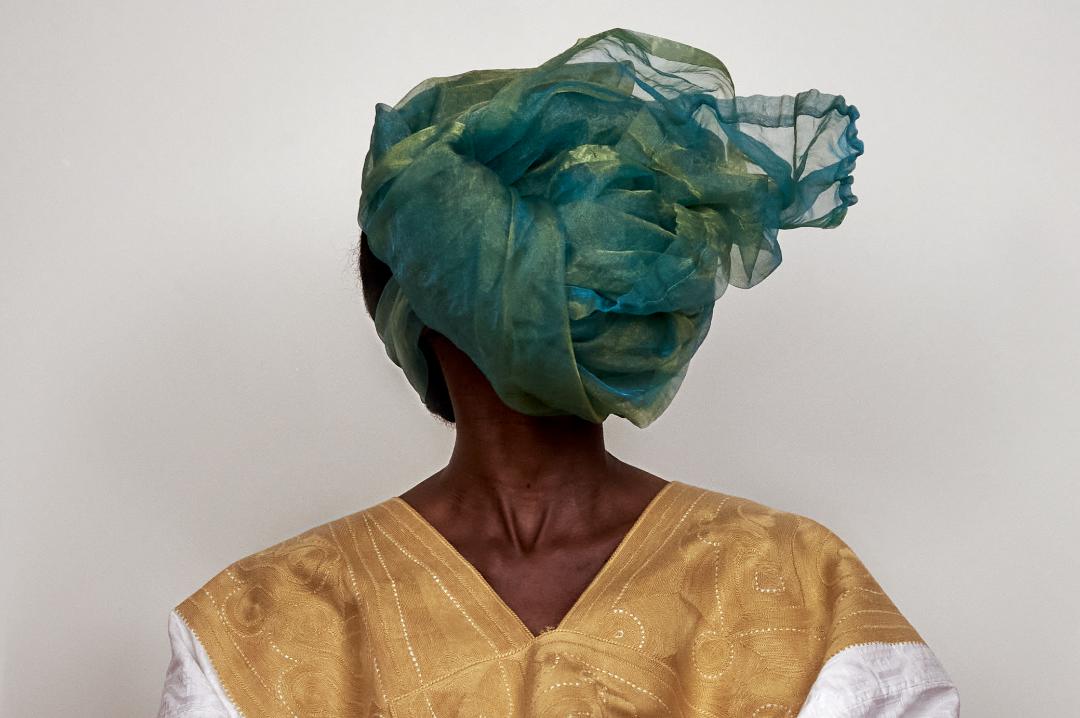
Souleymane Bachir Diaw, Worn Navy Blue Hijab, Blue Note, 2022, series Sutura, 2021–ongoing Courtesy of the artist (particolare)
Les Rencontres d’Arles | Nuovi talenti
Dal Prix Découverte a L’Image Canibale, fino agli studenti dell’ENSP e al Dior Photography and Visual Arts Award for Young Talents, il festival francese dedica ampio spazio a una nuova generazione di artisti che sperimenta con fotografia, video, tessile e installazioni, confermando Arles come uno dei principali luoghi di scoperta della scena fotografica internazionale
Carolina Sandretto
Leggi i suoi articoliLes Rencontres d’Arles confermano la loro attenzione ai nuovi talenti della fotografia. Anche quest’anno il festival propone oltre dieci mostre dedicate a giovani autori internazionali, le cui opere esplorano i confini dell’immagine fotografica attraverso video, foto ed installazioni. La mostra collettiva «L’Image Canibale» della curatrice Italiana Alessandra Chiericato, parla della relazione tra corpo e immagine. Chiericato ha vinto il premio curatoriale delle Rencontres nel 2024, e in questa esposizione si pone una domanda: che cos'è la fotografia? Secondo lei, «la fotografia non è una semplice copia del reale, ma un atto predatorio che divora la realtà, trasformando l’immagine in un corpo a sé stante: l’immagine cannibale». Nella mostra sono presentati lavori di diversi artisti che illustrano come l’immagine trascenda la carta per incarnarsi fisicamente nello spazio, attraverso materiali che evocano la carne, la pelle e la corporeità. In «Le Seuil», Melissa Boucher-Morales (1986) ci fa attraversare un tessuto raffigurante due mani che aprono un reggiseno che diventa una soglia, invitando lo spettatore a entrare nell’intimità del corpo dell’immagine. In «La Matérialisation», Dune Varela (1976) stampa le sue fotografie sul marmo, creando un effetto di trompe-l’œil. Lo sguardo è ingannato e non distingue più tra immagine, rilievo, venature della pietra e corpo fotografato. Infine, con «L’Apothéose – Mater porosa» di Lucile Boiron: un’installazione site-specific composta da fotografie di pelle di neonato, bocca, seno e resine termoformate che posano sulla superficie delle fotografie una patina trasparente e liquida. Lìopera rappresenta il corpo dell’«immagine cannibale»: un’entità porosa, vischiosa e materna, sospesa tra il sublime e il perturbante. La mostra riunisce opere che manipolano la materia fotografica (stampe analogiche, specchi) e che superano i supporti tradizionali, utilizzando tessuto, marmo e ceramica per dare forma a questa idea.
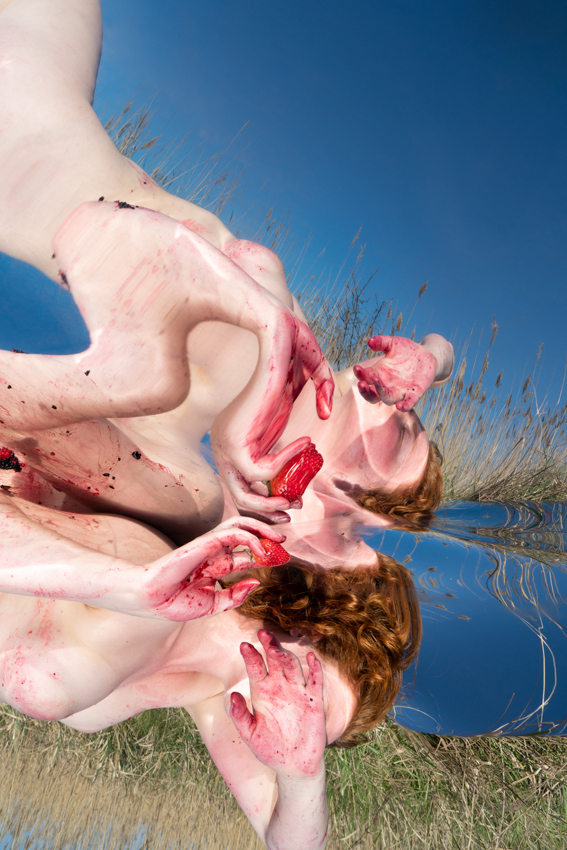
Henriette Sabroe Ebbesen, Lust, series Feminine Development, 2019 Courtesy of the artist
Tra i giovani del concorso del Prix Découvertes di quest’anno è molto popolare l’uso del tessile, a conferma della tendenza che vediamo nell’arte. La curatrice Nadine Houkpatin affronta l’argomento della rimozione di certe parti di cultura da musei ed istituzioni e riflette sul ruolo dell’immagine nella costruzione della realtà e della verità. Questi atti di censura mostrano quanto i racconti storici e le memorie siano fragili e fa nascere la domanda: come può la fotografia dire o rappresentare la verità? La vincitrice del Premio Madame Figaro è Mallory Lowe Mpoka (1996). Assumendo il ruolo di nuova matriarca della sua famiglia, l’artista riflette su chi erediti la responsabilità di custodire la memoria e le tradizioni. Il tessuto diventa il mezzo simbolico di questo passaggio: trasmette legami familiari, gesti e storie. Nello spazio espositivo, una serie di grandi arazzi ispirati agli archivi fotografici della famiglia rende visibile questa trasmissione. Perle, ricami e intrecci restituiscono la complessità e le difficoltà della sua storia familiare. Nel film «She Who Summons», un’antica danza rituale tra due donne trasforma il corpo in strumento di memoria e di trasmissione della conoscenza ancestrale. Phan Quang (1976), in «Re/Cover», ci porta in Vietnam, suo paese natale, dentro le famiglie discriminate perché «colpevoli» di aver avuto delle relazioni o dei figli con gli invasori Giapponesi. Nelle sue fotografie, Phan Quang ritrae i soggetti nei loro spazi domestici, avvolti in un tradizionale velo da sposa bianco. Il velo diventa simbolo di assenza, memoria e protezione, celando e rivelando l’origine delle persone fotografate. Le immagini mettono così in dialogo la memoria individuale delle famiglie con quella collettiva della storia del paese. Il legame con il tessile è presente nel lavoro di Souleymane Bachir Diaw (1995) che in «Sutura» parla del patriarcato fotografandolo sotto forma di un tessuto che immobilizza le figure femminile. Il nome del progetto evoca in wolof il pudore, mentre in latino la sartoria. Nelle fotografie le donne hanno il volto coperto di tessuto, i corpi stretti dentro cinture. Attraverso questi tessuti del Sahel, europei e mediorientali, l'artista riflette su memoria, identità e riparazione. Il tessuto diventa un archivio vivente che custodisce storie, silenzi e tracce di migrazioni evocando la privazione della voce e della capacità di espressione.
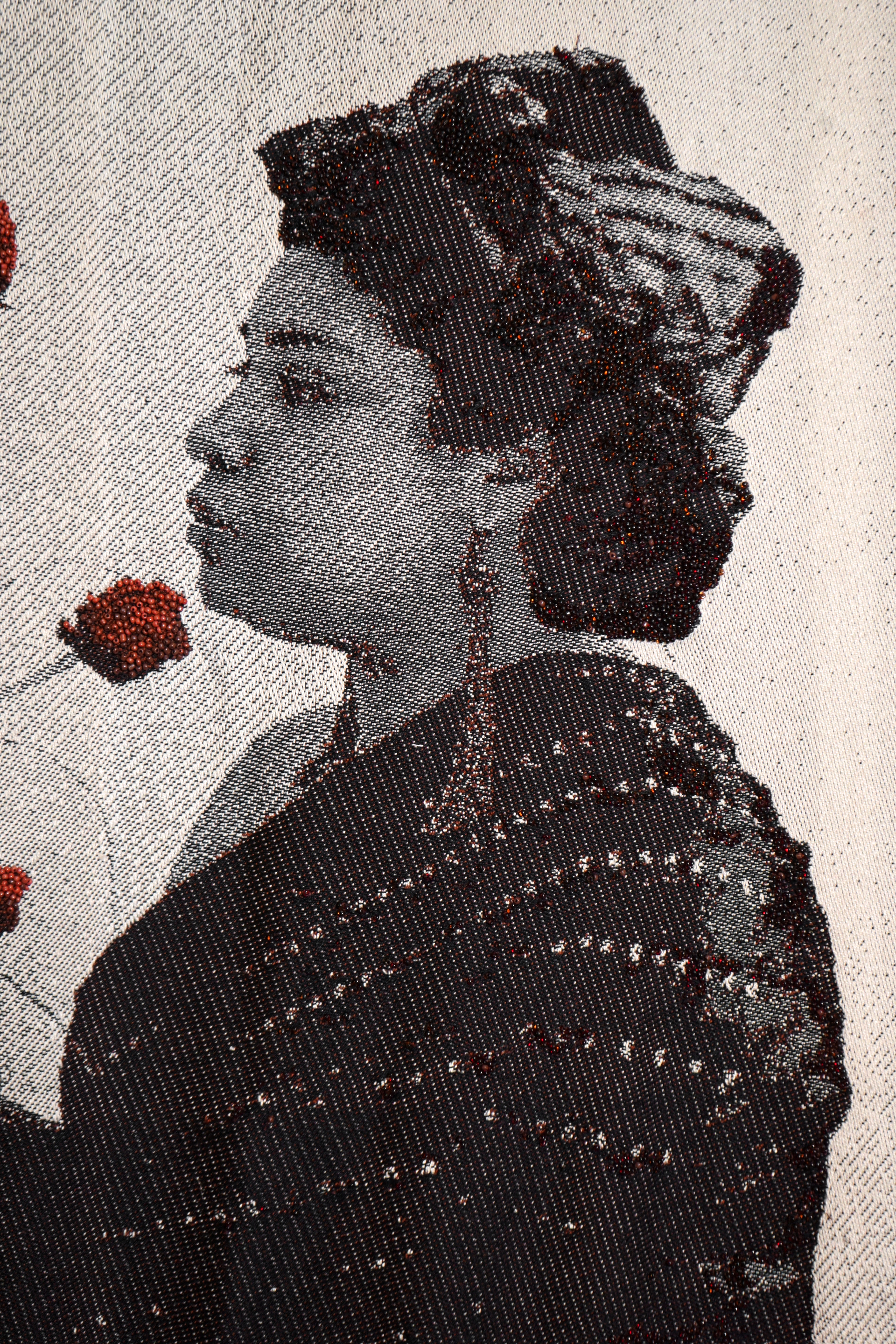
Mallory Lowe Mpoka, In the Weft of Memory (detail), National Gallery of Canada, Ottawa, 2025, Jacquard weave and glass beads Courtesy of the artist
Tra i giovani talenti che gravitano Arles ci sono gli studenti della ENSEP la scuola nazionale di fotografia da sempre fucina di grandi talenti. Nella mostra annuale spicca il lavoro di Guillaume Chevalier Fustec per la sua intensità. In seguito alla improvvisa morte di due donne a lui molto vicine, l’autore crea «Swift and Swallow», un’installazione fotografica di immagini in bianco e nero di varie dimensioni dove esplora il suo lutto pensando che l’universo gli stia mandando dei segni. Seguendo il viaggio simbolico delle ceneri di una delle morte, che gli ha chiesto di lasciare in luoghi precisi, il suo lavoro esprime l’assenza attraverso gli oggetti e i ricordi. Esplorando questo lutto scopre una nuova maniera di percepire la sua vita. In opposizione a questo lavoro invece è quello di Lara Tabet con la curatrice Yasmine Chemali. Tabet (1983) che ha una formazione di biologa, ci porta nel mondo della vita dei batteri dove trovano ispirazione le sue opere. In «Les Corps Vitré» Tabet preleva nei luoghi importanti della sua vita dei campioni di acqua. Farà poi interagire l’acqua con delle superfici fotosensibili. Incubati sulla gelatina di una pellicola a colori, batteri e microbi ne alterano la chimica attraverso processi di corrosione ed erosione. Molto importante l’apporto della curatrice Yasmine Chemali che immagina la mostra, allestita su vetrate come quelle delle chiese, all’interno delle quali sono presentate le fotografie. Queste immagini rendono visibile l’attività microbiologica facendo emergere questioni come la tossicità ambientale, industriale e politica che attraversano i territori. I giovani sono presenti anche al premio Dior per la fotografia presentato a Luma. Il fotografo Araki Takenobu dell’Università di Tokyo. L’artista utilizza il proprio corpo come materiale per creare immagini che oscillano tra realtà e invisibile, ispirate ai ricordi d’infanzia e a esperienze considerate «paranormali». Attraverso collage e installazioni, compone corpi frammentati e ricostruiti che sembrano sculture surrealiste, riflettendo sul corpo, sulla sua percezione e sul confine tra il visibile e l'ignoto. La presenza di giovani talenti alle Rencontres d’Arles resta una delle caratteristiche più significative del festival. Lo spazio che viene loro dedicato, la cura delle mostre e la possibilità di ottenere una visibilità internazionale ricordano quanto i festival siano luoghi essenziali per scoprire nuove voci, oltre che per sostenere le carriere degli artisti più affermati.
Les Rencontres d’Arles | Emerging Talents
From the Prix Découverte to L’Image Canibale, right through to the ENSP students and the Dior Photography and Visual Arts Award for Young Talents, the French festival devotes considerable space to a new generation of artists experimenting with photography, video, textiles and installations, confirming Arles as one of the leading venues for discovering new talent on the international photography scene
Les Rencontres d’Arles reaffirm their commitment to new talent in photography. Once again this year, the festival presents over ten exhibitions dedicated to young international artists, whose works explore the boundaries of the photographic image through video, photography and installations. The group exhibition ‘L’Image Canibale’, curated by the Italian Alessandra Chiericato, examines the relationship between the body and the image. Chiericato won the Rencontres’ curatorial prize in 2024, and in this exhibition she poses a question: what is photography? In her view, ‘photography is not simply a copy of reality, but a predatory act that devours reality, transforming the image into a body in its own right: the cannibal image’. The exhibition features works by various artists that illustrate how the image transcends the paper to become physically embodied in the space, through materials that evoke flesh, skin and corporeality. In ‘Le Seuil’, Melissa Boucher-Morales (1986) leads us through a fabric depicting two hands unfastening a bra that becomes a threshold, inviting the viewer to enter the intimacy of the image’s body. In ‘La Matérialisation’, Dune Varela (1976) prints her photographs onto marble, creating a trompe-l’œil effect. The eye is deceived and can no longer distinguish between image, relief, the veining of the stone and the photographed body. Finally, Lucile Boiron’s ‘L’Apothéose – Mater porosa’: a site-specific installation comprising photographs of a newborn’s skin, mouth and breast, alongside thermoformed resins that lay a transparent, liquid patina over the surface of the photographs. The work represents the body of the‘cannibal image’: a porous, viscous and maternal entity, suspended between the sublime and the uncanny. The exhibition brings together works that manipulate photographic materials (analogue prints, mirrors) and that go beyond traditional media, using fabric, marble and ceramics to give shape to this idea.
Among the young artists in this year’s Prix Découvertes competition, the use of textiles is very popular, confirming the trend we are seeing in art. The curator Nadine Houkpatin addresses the issue of the removal of certain aspects of culture from museums and institutions and reflects on the role of the image in the construction of reality and truth. These acts of censorship demonstrate just how fragile historical narratives and memories are, raising the question: how can photography convey or represent the truth? The winner of the Madame Figaro Prize is Mallory Lowe Mpoka (1996). Taking on the role of her family’s new matriarch, the artist reflects on who inherits the responsibility of safeguarding memory and traditions. Fabric becomes the symbolic medium of this transition: it conveys family ties, gestures and stories. In the exhibition space, a series of large tapestries inspired by the family’s photographic archives brings this transmission to life. Pearls, embroidery and weaving convey the complexity and difficulties of her family history. In the film ‘She Who Summons’, an ancient ritual dance between two women transforms the body into an instrument of memory and the transmission of ancestral knowledge. Phan Quang (1976), in ‘Re/Cover’, takes us to Vietnam, his native country, into the lives of families discriminated against because they were ‘guilty’ of having had relationships or children with the Japanese invaders. In his photographs, Phan Quang portrays his subjects in their domestic spaces, draped in a traditional white bridal veil. The veil becomes a symbol of absence, memory and protection, both concealing and revealing the origins of those photographed. The images thus create a dialogue between the individual memories of families and the collective memory of the country’s history. The connection with textiles is evident in the work of Souleymane Bachir Diaw (1995), who, in ‘Sutura’, addresses patriarchy by depicting it as a fabric that immobilises female figures. The project’s title evokes modesty in Wolof, whilst in Latin it refers to tailoring. In the photographs, the women’s faces are covered with fabric, their bodies constricted by belts. Through these fabrics from the Sahel, Europe and the Middle East, the artist reflects on memory, identity and healing. The fabric becomes a living archive that preserves stories, silences and traces of migration, evoking the deprivation of a voice and the ability to express oneself.
Among the young talents gravitating towards Arles are the students of ENSEP, the national school of photography, which has always been a breeding ground for great talent. In the annual exhibition, the work of Guillaume Chevalier Fustec stands out for its intensity. Following the sudden death of two women very close to him, the artist created ‘Swift and Swallow’, a photographic installation comprising black-and-white images of various sizes in which he explores his grief, believing that the universe is sending him signs. Following the symbolic journey of the ashes of one of the deceased, who had asked him to scatter them in specific places, his work expresses absence through objects and memories. By exploring this grief, he discovers a new way of perceiving his life. In contrast to this work is that of Lara Tabet, curated by Yasmine Chemali. Tabet (1983), who trained as a biologist, takes us into the world of bacterial life, from which her works draw inspiration. In ‘Les Corps Vitré’, Tabet collects water samples from significant places in her life. She then allows the water to interact with photosensitive surfaces. Incubated on the gelatine layer of colour film, bacteria and microbes alter its chemistry through processes of corrosion and erosion. The contribution of curator Yasmine Chemali is particularly significant; she conceived the exhibition, staged on stained-glass panels reminiscent of those found in churches, within which the photographs are displayed. These images make microbiological activity visible, bringing to the fore issues such as environmental, industrial and political toxicity that permeate these territories. Young artists are also represented at the Dior Photography Prize presented at Luma. The photographer Araki Takenobu from the University of Tokyo. The artist uses his own body as material to create images that oscillate between reality and the invisible, inspired by childhood memories and experiences considered ‘paranormal’. Through collages and installations, he composes fragmented and reconstructed bodies that resemble surrealist sculptures, reflecting on the body, its perception and the boundary between the visible and the unknown. The presence of young talent at the Rencontres d’Arles remains one of the festival’s most significant features. The space dedicated to them, the curation of the exhibitions and the opportunity to gain international visibility serve as a reminder of how essential festivals are for discovering new voices, as well as for supporting the careers of more established artists.
Carolina Sandretto, 14 luglio 2026 | © Riproduzione riservata
Carolina Sandretto
Leggi i suoi articoliAltri articoli dell'autore
Nel secondo reportage da Les Rencontres d’Arles, un percorso tra le mostre dedicate ai grandi protagonisti della fotografia del Novecento, da Edward Steichen a William Klein, fino a Harry Gruyaert e Martine Barrat, riletti attraverso nuove prospettive critiche
Tra fotografi, curatori e visitatori da tutto il mondo, al via il primo giorno della settimana inaugurale del festival Les Rencontres d’Arles, dedicata ad Africa e Mediterraneo tra indipendenze, migrazioni e riletture della memoria fotografica contemporanea
Processi, materiali, invenzioni chimiche e ottiche sono i principali fattori che son cambiati nel corso di due secoli
Nominata lo scorso dicembre, le neodirettrice si è insediata ufficialmente alla guida del museo parigino e ci illustra i suoi progetti futuri