IL NUMERO DI LUGLIO-AGOSTO 2026 in edicola
IL NUMERO DI LUGLIO-AGOSTO 2026 in edicola
IL NUMERO DI LUGLIO-AGOSTO 2026 in edicola
IL NUMERO DI LUGLIO-AGOSTO 2026 in edicola
IL NUMERO DI LUGLIO-AGOSTO 2026 in edicola
IL NUMERO DI LUGLIO-AGOSTO 2026 in edicola
IL NUMERO DI LUGLIO-AGOSTO 2026 in edicola
IL NUMERO DI LUGLIO-AGOSTO 2026 in edicola


Verifica le date inserite: la data di inizio deve precedere quella di fine


Quinto giorno da Arles | Alfredo Jaar fa brillare la notte francese
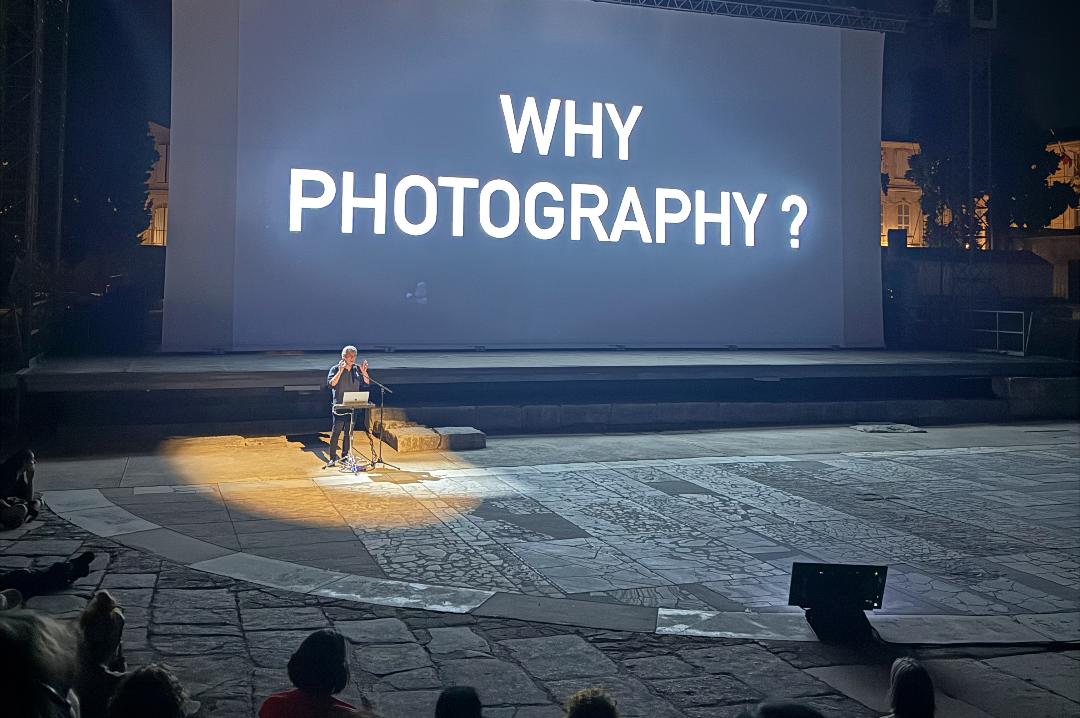
Nel Teatro Antico di Arles l’artista cileno inaugura i Rencontres 2026 con una lectio sulla fotografia come responsabilità civile. Dal golpe di Pinochet al Rwanda, dai migranti a Gaza, ripercorre quarant’anni di opere dedicate alla memoria, ai diritti umani e al potere delle immagini
Chiara Massimello
Leggi i suoi articoliÈ stato Alfredo Jaar, insieme all’americana Ming Smith e al coreano Park Chan-Wook, a far brillare ieri sera il Teatro Antico di Arles per l’apertura dei Rencontres de la Photographie. Sui gradoni di pietra, ancora caldi dal sole della giornata, l’artista cileno, architetto e regista (nato nel 1956), che aveva già partecipato ai Rencontres d'Arles nel 2013 sotto la direzione di François Hébel, ha mostrato ancora una volta la sua straordinaria capacità di esaminare il passato in costante confronto con il presente, il suo impegno politico, l’attenzione per i diritti umani e l’intolleranza verso le troppe ingiustizie. Il pubblico, numeroso e attento, si è lasciato trasportare per più di un’ora sul tema della memoria come atto politico. Jaar apre il suo intervento citando Gramsci (1936) «Il vecchio mondo sta morendo, quello nuovo tarda a comparire. E in questo chiaroscuro nascono i mostri». Le parole vengono scandite sul grande schermo alle sue spalle. Subito dopo partono le note di "What's Going On" di Marvin Gaye, brano del 1973, un pezzo famosissimo in Cile in quell’anno. L’antico teatro è tutto per lui, in attesa delle sue parole. «A 17 anni, nel 1973 in Cile, ero felice, nessuno sapeva cosa sarebbe successo». L’ artista torna al 1970 e racconta l'elezione del presidente democratico Salvador Allende e la nazionalizzazione del rame (di cui il Cile era il primo produttore mondiale) che ridava nelle mani del Paese il controllo delle miniere fino ad allora sfruttate da compagnie statunitensi.
1973 è l’anno in cui i Pink Floyd pubblicano “The dark side of the moon”, uno degli album più incredibili della musica rock, di cui Jaar era a quel tempo ossessionato, «l’ascoltavo sempre». Ma il 1973 è anche l’anno del golpe di Pinochet, dei roghi di libri, dell’avvento della dittatura. Parte la musica dei Pink Floyd e il filmato della repressione e del dramma di tutto un Paese. Il teatro ascolta assorto. Compare una vecchia scritta su un muro, una citazione di Allende «Essere giovani e non essere rivoluzionari è quasi una contraddizione biologica» (1972).Jaar prosegue raccontando la sua ossessione per il numero 11, giorno di settembre in cui Pinochet è salito al potere nel 1973. «17 anni di orrore». Si accende sul grande schermo una foto della celebre fotogiornalista statunitense Susan Meiselas, ”Sandinista Barricade” (1979) che raffigura un soldato con un fucile e un clarinetto a tracolla tra alcuni rivoluzionari in assetto di guerra, sulle barricate in Nicaragua. Da questa immagine, da cui è nata anche una video performance di Jaar (Opus1981/Andante Desesperado), un potente lamento dell’artista cileno per la privazione della libertà, il discorso passa al politico Henry Kissinger, responsabile della morte di milioni di persone e mai processato, nel corso della sua lunga vita per le sue responsabilità. E poi Gaza, Trump, il Venezuela, l’Iran. «We live in very dark times» dice Jaar.
La Destra avanza in tutta Europa: Jaar cita la Polonia, l’Austria l’Italia, la Francia, la Germania, il Belgio, l’Olanda, la Svezia, la Danimarca, l’Ungheria; e poi Israele, la Russia, l’India, gli Stati Uniti, Il Brasile, il Cile, l’Argentina e ancora altri. Vero problema e causa di tutto pare essere solo l’immigrazione. Gli immigrati «Sembrano responsabili di tutto quello che accade». Il soggetto del discorso cambia nuovamente (come solo lui sa fare). Si passa ai campi di rifugiati, alla tragedia dei migranti, ai milioni di persone che si muovono intorno al mondo, un numero che continua a crescere. Jaar parla del caso della Germania di Angela Merkel, dove tra il 2015 e il 2016, sono stati concessi un milione di passaporti ai richiedenti asilo, gesto che, racconta Jaar, ha corrisposto a un milione di voti raccolti dall'estrema destra poco dopo. Anche qui Jaar mostra il suo lavoro: un milione di passaporti tedeschi (One Milion German Passports) nella rotonda della Pinakothek der Moderne di Monaco (2023). Al centro del discorso di Jaar, ci sono molti dei grandi progetti che hanno segnato il suo percorso. Il “Rwanda Project,” è nato dal genocidio e dai sanguinosi massacri del 1994 e dal silenzio con cui il mondo ha lasciato che accadesse. In questo progetto rientra "The Eyes of Gutete Emerita", presentato per la prima volta proprio ad Arles. 1 milione di diapositive riunite insieme che raffigurano tutte gli stessi occhi, quelli di Gutene Emerita, «gli occhi che hanno visto il genocidio che noi non abbiamo voluto vedere» dice Jaar. E poi “Six Seconds”, l’immagine sfuocata di una ragazzina di spalle, vista solo per 6 secondi, pochi istanti che non si dimenticano. Per Jaar è un paradosso che lui, cileno che vive a New York, racconti il Rwanda a un pubblico francese. Il racconto non può che essere sfuocato. Le immagini cambiano e cambia ancora una volta il tema, si passa al progetto sulla celebre rivista Life, dal titolo indicativo “Seaching for Africana in Life” (1996). Una gigantesca installazione di tutte le 2.128 copertine del settimanale americano (pubblicato dal 1936 al 1996) in cui sono in tutto 5 le immagini dell’Africa, per la maggioranza stereotipi esotici e animali selvaggi. Jaar parla poi di “Lights in the City” (1999), progetto realizzato in Canada, a Montreal, nella cupola dell’edificio storico del Marché Bonsecours. L’opera è un’installazione luminosa di un rosso acceso e accecante all’interno della cupola, un modo per rendere visibili gli invisibili, per porre l’attenzione sui senzatetto nelle grandi, ricche città del Nord America. Infine, “The Skoghall Konshall “(2000), una provocazione concettuale per sottolineare l’importanza di un polo culturale per la comunità nell’omonima cittadina della Svezia che ospita l’enorme fabbrica Stora Enso che produce carta per imballaggi tetra pack. Jaar ha progettato e costruito un museo “effimero”, poi bruciato 24ore dopo l’apertura. Un gesto forte per provocare un senso di mancanza e di nuova consapevolezza in una comunità che per tanti anni non aveva un luogo dedicato all’arte. Dopo 7 anni, sarà Jaar stesso a progettarlo su incarico della comunità. Jaar ha chiuso l'intervento ricordando "The Power of Words", il progetto originariamente realizzato nel 1984. «Accaddero quell’anno cose terribili. Niente in confronto a quello che accade ora». Parla allora del potere della fotografia e racconta il progetto "Inferno e Paradiso", esposto a Cortona On The Move nel 2025 e ora al Photo Elysée di Losanna fino al 1° novembre. Venti fotoreporter internazionali sono stati incaricati di selezionare all’interno dei loro archivi due immagini: un’immagine di orrore e una di speranza. I fotoreporter per Jaar «Portano il peso del mondo sulle loro spalle» e «nelle loro foto troviamo la verità». Qual è allora il senso del fotografare oggi? Le immagini, secondo Jaar, dicono ciò che le parole non riescono più a dire. Gli occhi stimolano il cervello e il cervello poi va al cuore. E poi di nuovo.
Day Five in Arles | Alfredo Jaar lights up the French night
At the Ancient Theatre in Arles, the Chilean artist opened the Rencontres 2026 with a lecture on photography as a civic responsibility. From Pinochet’s coup to Rwanda, from migrants to Gaza, he retraced forty years of work dedicated to memory, human rights and the power of images
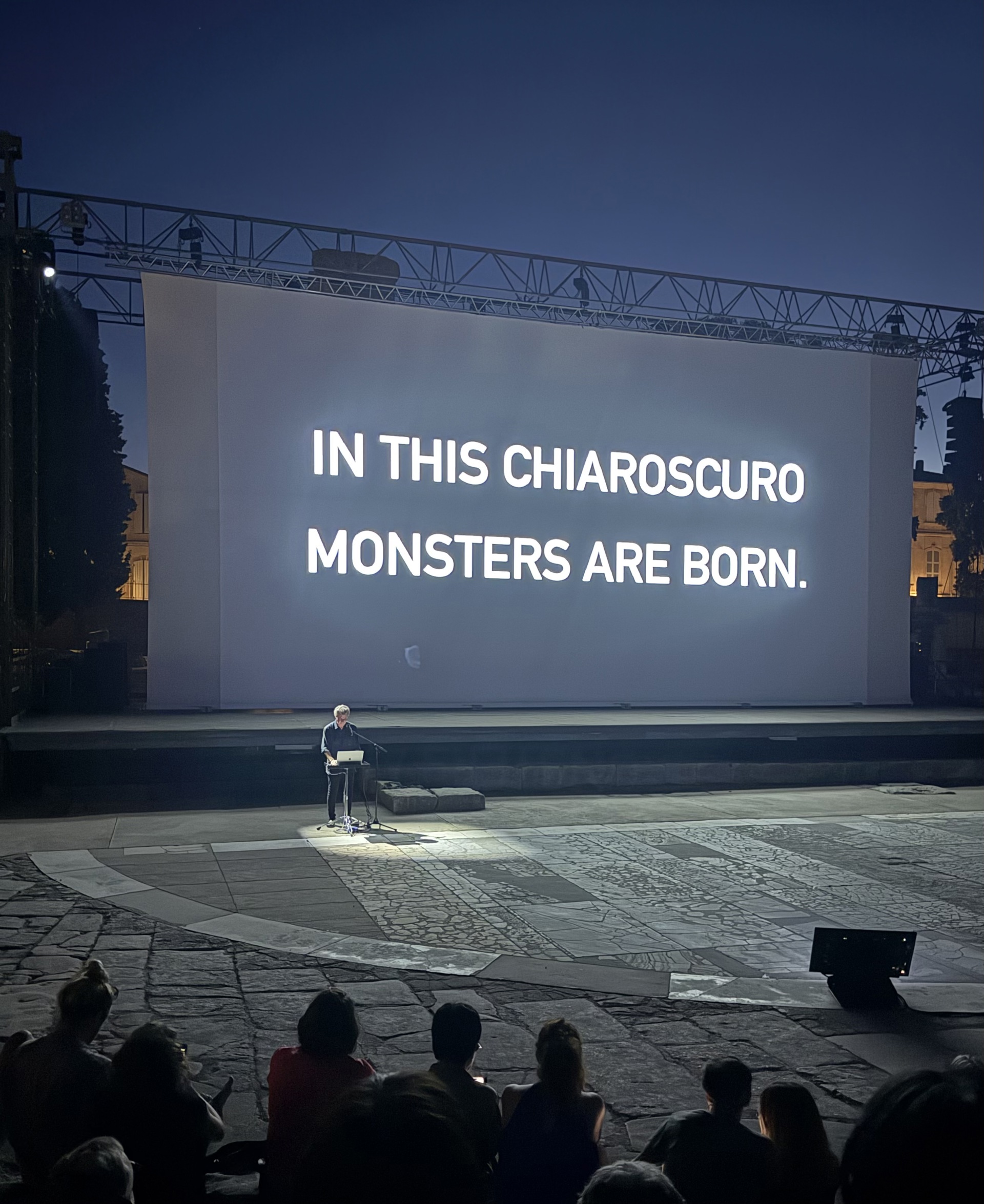
It was Alfredo Jaar, alongside the American Ming Smith and the Korean Park Chan-Wook, who lit up the Ancient Theatre of Arles last night for the opening of the Rencontres de la Photographie. On the stone steps, still warm from the day’s sun, the Chilean artist, architect and film director (born in 1956)—who had previously taken part in the Rencontres d’Arles in 2013 under the direction of François Hébel, once again demonstrated his extraordinary ability to examine the past in constant dialogue with the present, his political commitment, his focus on human rights and his intolerance of the all-too-many injustices. The large and attentive audience was captivated for over an hour by the theme of memory as a political act. Jaar began his talk by quoting Gramsci (1936): ‘The old world is dying, the new one is slow to emerge. And in this twilight, monsters are born.’ The words were displayed on the large screen behind him. Immediately afterwards, the opening notes of Marvin Gaye’s “What’s Going On” – a 1973 track that was hugely popular in Chile that year – began to play. The historic theatre was entirely his, awaiting his words. “At 17, in Chile in 1973, I was happy; nobody knew what was going to happen.” The artist goes back to 1970 and recounts the election of the democratic president Salvador Allende and the nationalisation of copper (of which Chile was the world’s leading producer), which returned control of the mines – previously exploited by US companies – to the country.
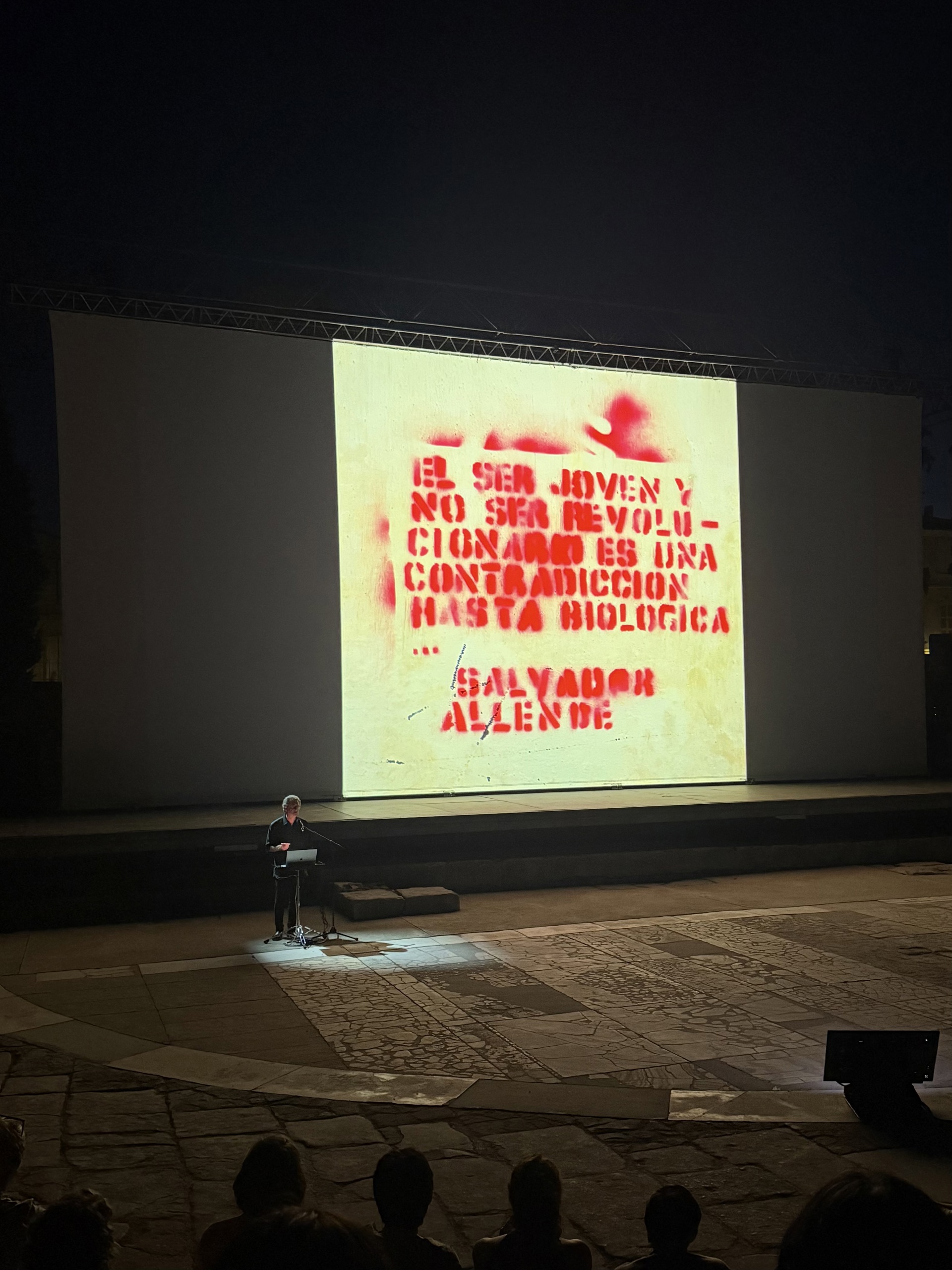
1973 was the year in which Pink Floyd released “The Dark Side of the Moon”, one of the most incredible albums in rock music, with which Jaar was obsessed at the time: “I listened to it all the time.” But 1973 was also the year of Pinochet’s coup, of book burnings, and of the advent of the dictatorship. Pink Floyd’s music begins to play, accompanied by footage of the repression and the tragedy unfolding across an entire country. The theatre listens intently. An old graffiti message appears on a wall, a quote from Allende: “To be young and not to be a revolutionary is almost a biological contradiction” (1972). Jaar goes on to describe his obsession with the number 11, the day in September on which Pinochet came to power in 1973. “17 years of horror”. A photograph by the renowned American photojournalist Susan Meiselas, “Sandinista Barricade” (1979), appears on the big screen, depicting a soldier with a rifle and a clarinet slung over his shoulder amongst revolutionaries in combat gear on the barricades in Nicaragua. From this image – which also inspired a video performance by Jaar (Opus1981/Andante Desesperado), a powerful lament by the Chilean artist over the deprivation of liberty – the discussion turns to the politician Henry Kissinger, responsible for the deaths of millions of people and never brought to trial, throughout his long life, for his actions. And then Gaza, Trump, Venezuela, Iran. “We live in very dark times,” says Jaar.
The Right is on the rise across Europe: Jaar cites Poland, Austria, Italy, France, Germany, Belgium, the Netherlands, Sweden, Denmark and Hungary; and then Israel, Russia, India, the United States, Brazil, Chile, Argentina and many more. The real problem and cause of it all seems to be immigration alone. Immigrants “seem to be responsible for everything that is happening”. The subject of the discussion changes again (as only he knows how). The focus shifts to refugee camps, the tragedy of migrants, and the millions of people on the move around the world – a number that continues to grow. Jaar discusses the case of Angela Merkel’s Germany, where, between 2015 and 2016, one million passports were granted to asylum seekers – a move which, Jaar explains, corresponded to one million votes won by the far right shortly afterwards. Here too, Jaar exhibits his work: one million German passports (One Million German Passports) in the rotunda of the Pinakothek der Moderne in Munich (2023). At the heart of Jaar’s discourse lie many of the major projects that have marked his career. The “Rwanda Project,” arose from the genocide and bloody massacres of 1994 and the silence with which the world allowed them to happen. This project includes “The Eyes of Gutete Emerita”, first presented in Arles. One million slides brought together, all depicting the same eyes – those of Gutete Emerita – “the eyes that witnessed the genocide we chose not to see”, says Jaar. And then “Six Seconds”, the blurred image of a young girl seen from behind, glimpsed for just 6 seconds – a few fleeting moments that cannot be forgotten. For Jaar, it is a paradox that he, a Chilean living in New York, should be telling the story of Rwanda to a French audience. The narrative cannot help but be blurred. The images change and the theme shifts once more, moving on to the project on the famous magazine Life, with the telling title “Searching for Africana in Life” (1996). A gigantic installation comprising all 2,128 covers of the American weekly (published from 1936 to 1996), featuring a total of just five images of Africa – the majority of which are exotic stereotypes and wild animals. Jaar then discusses “Lights in the City” (1999), a project realised in Montreal, Canada, within the dome of the historic Marché Bonsecours building. The work is a bright, blinding red light installation inside the dome, a way of making the invisible visible, of drawing attention to the homeless in the large, wealthy cities of North America. Finally, “The Skoghall Konshall” (2000), a conceptual provocation designed to highlight the importance of a cultural centre for the community in the eponymous Swedish town, home to the enormous Stora Enso factory which produces paper for Tetra Pak packaging. Jaar designed and built an “ephemeral” museum, which was then burnt down 24 hours after its opening. A powerful gesture to provoke a sense of loss and new awareness in a community that for many years had no dedicated space for art. Seven years later, Jaar himself would design it on behalf of the community.
Jaar concluded his talk by recalling “The Power of Words”, the project originally created in 1984. “Terrible things happened that year. Nothing compared to what is happening now.” He then spoke of the power of photography and described the project “Inferno e Paradiso”, exhibited at Cortona On The Move in 2025 and now on display at the Photo Elysée in Lausanne until 1 November. Twenty international photojournalists were commissioned to select two images from their archives: one depicting horror and one depicting hope. For Jaar, photojournalists “carry the weight of the world on their shoulders” and “in their photos we find the truth”. So what is the point of photography today? Images, according to Jaar, say what words can no longer express. The eyes stimulate the brain, and the brain then goes to the heart. And then back again.
Chiara Massimello, 10 luglio 2026 | © Riproduzione riservata
Chiara Massimello
Leggi i suoi articoliAltri articoli dell'autore
Un appuntamento irrinunciabile nella calda estate del sud della Francia: dal 6 luglio al 4 ottobre «fotografi, curatori, editori, scrittori, docenti, storici, sostenitori e collezionisti giungono ad Arles da molti Paesi, soprattutto in occasione della frenetica settimana di inaugurazione. C’è un grande scambio di esperienze e idee», come afferma David Campany, curatore, scrittore e editore
Lo sostiene François Hébel, il nuovo direttore artistico di Camera, a Torino. Ed è un bene, perché, come afferma la direttrice di Cortona On The Move, Renata Ferri: «Nella mappa fotografica internazionale è praticamente inesistente»
Gli scatti di «un cittadino della Luna in visita d’istruzione sul pianeta Terra» sono esposti per la prima volta a Londra, all’Istituto italiano di Cultura
Cinque stampe in grande formato del fotografo romano sono esposte nella sede di montagna della Galleria Umberto Benappi